𝗪𝗜𝗡𝗡𝗘𝗥 Probiotics for Women and Men - With Prebiotic Fiber and Natural Lactase Enzyme for Digestive Health - 62% More Stable Probiotic for Gut Health Support - USA Made Vegan Formula Blend
4.3(42.6k)
$19.99
Renew Life Probiotics for Women, 25 Billion CFU Guaranteed, Probiotic Supplement for Digestive, Vaginal & Immune Health, Shelf Stable, Soy, Dairy & Gluten Free
4.6(25.5k)
$16.16
Renew Life Probiotics for Women, 2 Billion CFU, Probiotic Supplement for Urinary Tract Health, Soy, Dairy & Gluten Free, Vaginal & Urinary Complete with Cranberries, Cherry Flavor
4.6(25.5k)
$9.38
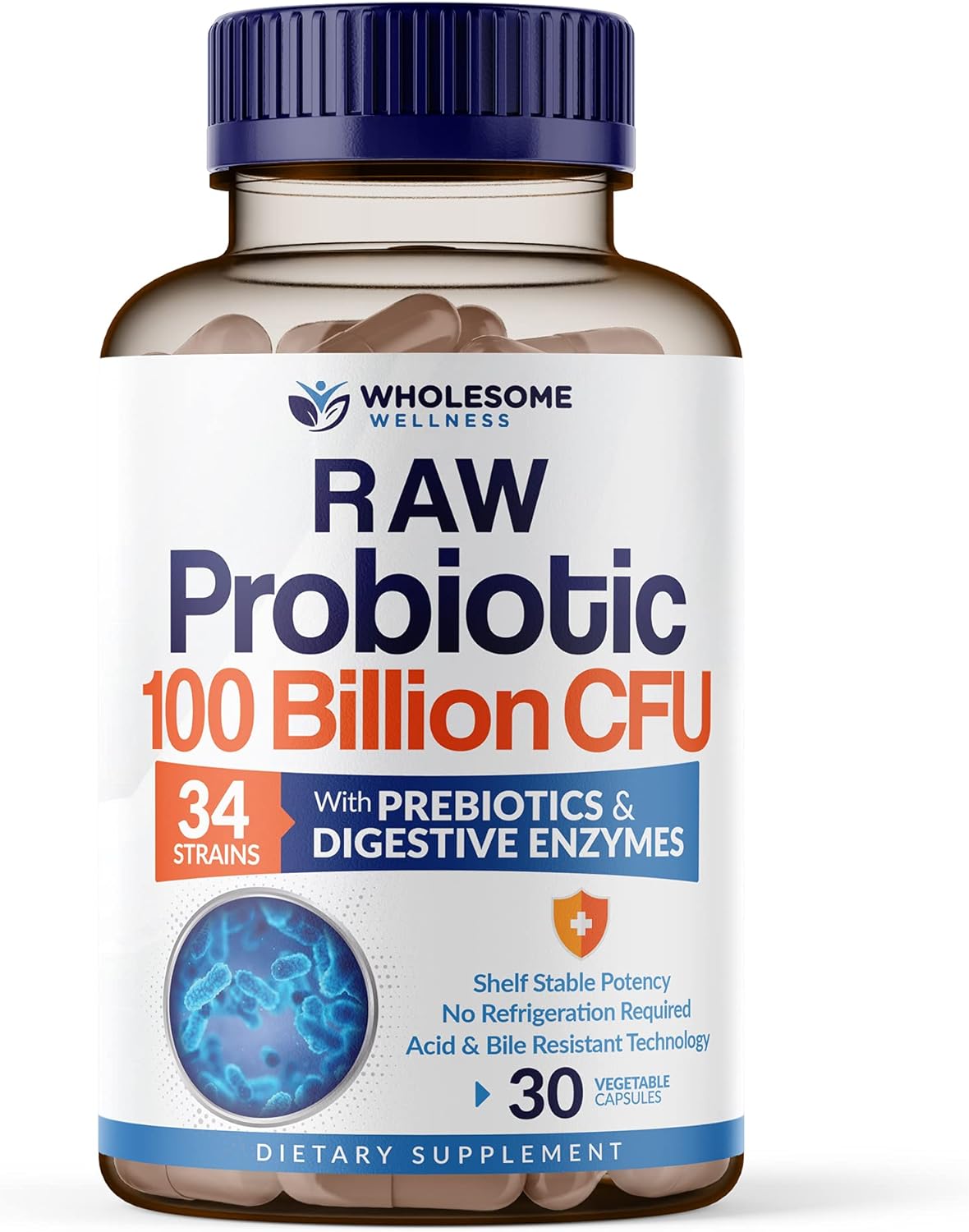
Organic Probiotics 100 Billion CFU, Dr Formulated Probiotics for Women, Probiotics for Men and Adults, Complete Shelf Stable Probiotic Supplement with Prebiotics & Digestive Enzymes; 30 Capsules
4.5(24.1k)
$25.00
RepHresh Pro-B Probiotic Supplement for Women, 30 Oral Capsules
4.6(20.9k)
$21.05
Customer Reviews
4.3 out of 5 · 20 reviews
Reviews are a representative sample of real customer reviews aggregated from public data and matched to this product; written reviews are representative samples, not verified individual purchases.
4.3
out of 5
this is the one my wife asks for
We have been adding several different pre and probiotics into our diets. This is the one that my wife asks for. You need the prebiotics to feed the probiotics. The prebiotics seems harder to find than the pro.<br /><br />Not long before the Covid19 outbreak, I had to take another round of antibiotics. Since this wipes out all of the good bacteria in my intestines, I stocked up on several different pre + probiotics. My thoughts are that different brands may have different types of good bacteria.<br /><br />After about two weeks of some serious probiotic dosages, which was also in the middle of the Covid19 outbreak, I got sick. I had a fever, cough, and shortness of breath. It really started to worry me. It only lasted two days and was gone. I have no proof but I am going to say that my pre and probiotics kept me from getting much sicker and also shortened the duration of my illness.
Faye N.·March 29, 2020·6 found this helpful
Great prebiotic
These really work for me! It has helped my reflux as well. Very easy to swallow.
Mason D.·September 3, 2019·6 found this helpful
Enteric coating, vegan, utilizes an experimental bacteriophage technology
INGREDIENTS<br /><br />PreforPro:<br />LH01 Myoviridae<br />LL5 Siphoviridae<br />T4D Myoviridae<br />LL12 Myhoviridae<br /><br />Bacillus subtilis<br />Bacillus coagulans<br />Lactobacillus acidophilus<br />Bifidobacterium lactis<br /><br />Delayed-release capsule: hydroxypropyl methylcellulose, pectin, and water<br /><br />PROS<br /><br />1. Manufacturer claims the product is manufactured in the USA.<br /><br />2. Manufacturer claims this product contains both probiotic and prebiotic features. (See below.)<br /><br />3. The product is vegan, with no gelatin.<br /><br />4. The product includes an enteric-coated, delayed-release capsule which allows the beneficial bacteria to not be killed by stomach acid. This coating is made of hydroxypropyl methylcellulose (see below), pectin, and water.<br /><br />5. The phrase, “manufactured in the USA,” can mean as little as bottling pills in the USA somewhere, while all the ingredients for the supplement are manufactured outside the USA (including, possibly, China). But there is at least a small chance that some of this product is actually manufactured in the USA if they are willing to proclaim it in their sales pitch.<br /><br />CONS<br /><br />1. Though this company has an address in Newport Beach, and it is listed with the Newport Beach, California Better Business Bureau, it is not BBB Accredited. No meaningful information about the company’s history, such as how long it has been in business in particular, is provided on its website.<br /><br />2. It bothers me a great deal is that this company dishonestly claims they themselves manufacture this product. They do not. By researching the trademarked name of this product, “PreforPro DE111 probiotic,” I discovered that PreforPro and DE111 are registered trademarks of Deerland Enzymes, Inc. Deerland is located in Kennesaw, Georgia. It was initially formed in 1990 and specialized in supplemental enzymes. Since around 2000, the company has gotten into the skyrocketing nutraceutical field of probiotics. Their main source of business is working with small companies like Stonehenge to customize supplements for them to sell under their own label. Deerland develops the customer-company’s product line, produces its products, and slaps the label of the company on these products. However, Deerland insists on getting credit to some degree, in the form of, in as tiny a font as possible, their name and trademark on a small corner of the product label.<br /><br />3. Issues with Hydroxypropyl methylcellulose (HPMC). This is the enteric coating on these tablets. HPMC is a water soluble, biodegradable, and biocompatible polymer which has been declared to have low toxicity. It has been utilized commercially for a wide range of applications in the following areas: as a drug and nutraceutical tablet binder (enteric coating) for extended-release delivery, in dyes and paints, cosmetics, adhesives, textiles, and in various applications in the food and agriculture industries. Unfortunately, HPMC is manufactured utilizing a process that involves the synthetic alteration of cellulose, a natural fiber, by using multiple toxic substances, including propylene oxide, which is considered to be carcinogenic, and chloromethane, which is extremely dangerous to be around. These toxic chemicals may not end up in sufficient quantity in these capsules to cause immediately quantifiable harm to consumers, but they are definitely very dangerous to the people manufacturing HPMC, and they are awful chemical contaminants when they are released into the air or water.<br /><br />4. This product has an experimental formulation using bacteriophages. You will see this listed on the label as: PreforPro: LH01 Myoviridae, LL5 Siphoviridae, T4D Myoviridae, and LL12 Myhoviridae. The information provided on this product by the seller, and the advertising copy on the Deerland website about this technology, claims that their bacteriophages are “prebiotics.” That is not accurate. Bacteriophages don’t function the same way that prebiotics do. Prebiotics are indigestible fiber that feed the healthy bacteria in the colon and encourage their growth through the process of fermentation (see below). The hoped-for goal of the bacteriophages in this supplement is that they will arrive in the colon and kill off only undesirable bacteria (and not any desirable bacteria), thereby creating opportunity in the colon’s microbiota for it to be re-colonized with the beneficial bacteria contained in this product. There is some small amount of research evidence so far that this technique might work in humans, but the results have not been as notable as Deerfield glowingly claims.<br /><br />In addition, there has been quite a bit of ongoing research about the functioning of naturally occurring bacteriophages in the human colon (see research below). They act as a kind of innate, overgrowth-control mechanism to create a dynamic equilibrium within the microbiota of the colon. There is strong evidence that introducing an abundance of beneficial bacteria from an outside source, in the form of a probiotic supplement (any brand, not just this one), may not exert a long-lasting effect because naturally occurring bacteriophages attack the ingested probiotic strains. Researchers in this field call this the “kill-the winner” concept. The vast majority of customers who ingest probiotics very likely do so because, for decades now, doctors have advised their patients to either eat yogurt with supposedly “live bacteria” or take probiotic supplements for a week or two after a course of antibiotics, because antibiotics indiscriminately wipe out good as well as bad bacteria in the microbiota of the colon. Patients dutifully ingest yogurt or probiotic pills for a week or two, and then stop.<br /><br />For a long time, researchers assumed that bifidobacteria are the least subject to being purged by bacteriophages in the gut, which is why they are the most frequently included bacterium in probiotic formulations—including this product. But recent genome-based investigations have exposed the existence of bacteriophage in almost all of the bifidobacterial genomes sequenced so far. So they aren’t free from being subject to “phage predation” either. Because of this issue, unless probiotics (or yogurt) are eternally taken, soon after they are stopped, the colon will very soon return to whatever microbial population balance that existed in it before the probiotic treatment. Sadly, that means that the beneficial bacteria killed off by antibiotics are not likely to be replenished by 7-14 days of probiotic ingestion. And, of course, the knowledge that probiotics need to be taken eternally is a gleeful reality for supplement companies, who charge enormous fees for their probiotics. The way to make money is repeat customers.<br /><br />MY CONCLUSION<br /><br />I personally wouldn’t recommend this product. I’m not a fan of being a guinea pig for its experimental use of bacteriophages. In addition, based on the company’s being so terribly self-impressed with this experimental technology, the price for this supplement has been stratospherically jacked up.<br /><br />For any fellow Amazon customers who might be interested, I have included below some of the relevant information I discovered as I researched this product, and its related topics of probiotics, bacteriophages, and the microbiota, before writing this review.<br /><br />AN ALTERNATIVE TO EXPENSIVE PROBIOTICS<br /><br />Hundreds of scientific studies have revealed that the most powerful way one can enhance the beneficial bacteria in the colon is not by taking a supplement such as this one. It is to avoid animal products and become a vegan, or at the very least a vegetarian. Animal products, especially red meat, have a well documented toxic effect on the colon, in particular increasing the risk of colon cancer. In addition, non-organic meat products are filled with antibiotics, which act to kill off the beneficial flora in the colon. In contrast, a diet filled with an abundance of high-fiber fruits, vegetables, whole grains, nuts, and legumes has an extremely healthy impact on the colon.<br /><br />The purpose of taking probiotics is to, hopefully, promote the healthy functioning of beneficial bacteria within the colon, which are collectively called the “microbiome” or “microbiota” or “microflora.” The microflora in the colon have a primary task of fermentation, which is the enzymatic decomposition and utilization of carbohydrates, particularly dietary fiber. During the process of fermenting fiber, these microflora release short-chain fatty acids (SCFA), such as acetate, propionate, and butyrate, and also bacteriocins. SCFA serve multiple important functions: (a) SCFA are a major source of energy for colon cells. (b) Along with the above mentioned bacteriocins, SCFA provide an antibacterial function, which stabilizes the normal, healthy microflora population in the colon by preventing the implantation of pathogens in the walls of the colon. (c) SCFA play a key role in the regulation of the neuro-immuno-endocrine system. Research has indicated that the nervous system, immune system, and endocrine system are anatomically and functionally interconnected. What affects one system also affects the other two when their homeostasis (a healthy state of stability and proper function) is disturbed by inflammation, stress or infection. When the microflora in the colon are operating at peak efficiency, producing adequate SCFA, then the healthy functioning of the nervous system, immune system, and endocrine system is enhanced. But in the reverse, if the microflora in the colon are not efficiently producing SCFA, then those three crucial systems in the body are negatively impacted.<br /><br />RELEVANT RESEARCH<br /><br />Aykan, N. Red Meat and Colorectal Cancer. Oncol Rev. 2015 Feb 10;9(1):288.<br /><br />Blaser, M. Antibiotic use and its consequences for the normal microbiome. Science. 2016;352(6285):544-545.<br /><br />Davani-Davari, D., et al. Prebiotics: Definition, types, sources, mechanisms, and clinical applications. Foods. 2019 Mar 9;8(3):92.<br /><br />den Besten, G., et al. The role of short-chain fatty acids in the interplay between diet, gut microbiota, and host energy metabolism. J Lipid Res. 2013 Sep;54(9):2325-40.<br /><br />Febvre, H., et al. Phage study: Effects of supplemental bacteriophage intake on inflammation and gut microbiota in healthy adults. Nutrients. 2019;11(3):666.<br /><br />Glick-Bauer, M., et al. The health advantage of a vegan diet: exploring the gut microbiota connection. Nutrients. 2014;(6):4822–38.<br /><br />Hu, J., et al. Short-chain fatty acids in control of energy metabolism. Crit Rev Food Sci Nutr. 2018;58(8):1243-1249.<br /><br />Kim, S., et al. The intestinal microbiota: antibiotics, colonization resistance, and enteric pathogens. Immunol Rev. 2017;279(1):90-105.<br /><br />Martin, O., et al. Antibiotic suppression of intestinal microbiota reduces heme-induced lipoperoxidation associated with colon carcinogenesis in rats. Nutr Cancer. 2015;67(1):119-125.<br /><br />Neuman, H., et al. Antibiotics in early life: dysbiosis and the damage done. FEMS Microbiol Rev. 2018;42(4):489-499.<br /><br />Rodriguez-Valera, F., et al. Explaining microbial population genomics through phage predation. Nat Rev Microbiol. 2009;7:828–836.<br /><br />Salonen, A., et al. Impact of diet on human intestinal microbiota and health. Annu Rev Food Sci Technol. 2014; (5):239–62.<br /><br />Shortt C, Hasselwander O, Meynier A, et al. Systematic review of the effects of the intestinal microbiota on selected nutrients and non-nutrients. Eur J Nutr. 2018;57(1):25-49.<br /><br />Silva, Y., et al. The role of short-chain fatty acids from gut microbiota in gut-brain communication. Front. Endocrinol. 2020 Jan 31.<br /><br />Tomova, A., et al. The effects of vegetarian and vegan diets on gut microbiota. Front. Nutr. 2019 Apr 17.<br /><br />Ventura, M., et al. Comparative analyses of prophage-like elements present in bifidobacterial genomes. Appl Environ Microbiol. 2009;75:6929–6936.<br /><br />Ventura, M., et al. Prophage-like elements in bifidobacteria: insights from genomics, transcription, integration, distribution, and phylogenetic analysis. Appl Environ Microbiol. 2005;71:8692–8705.<br /><br />Ventura, M., et al. The impact of bacteriophages on probiotic bacteria and gut microbiota diversity. Genes Nutr. 2011;6(3):205-207.<br /><br />Vulcan, A., et al. Intake of different types of red meat, poultry, and fish and incident colorectal cancer in women and men: results from the Malmö Diet and Cancer Study. Food Nutr Res. 2017 Jul 18;61(1):1341810.<br /><br />Williams, B. Gut fermentation of dietary fibres: physico-chemistry of plant cell walls and implications for health. Int J Mol Sci. 2017 Oct; 18(10): 2203.<br /><br />Wong, C. Beneficial effects of Bifidobacterium longum subsp. longum BB536 on human health: Modulation of gut microbiome as the principal action. J Func Foods. 2019 Mar;(54):506-519.
Mia K.·July 6, 2021·4 found this helpful
I wouldn’t order again.
Three stars only because I assume my body was receiving pre- and probiotics. Otherwise I could tell no difference, not a lick. Zero, zip, nada improvement that I could tell.
Cara S.·November 8, 2019·4 found this helpful
Perfect
This product help me considerably with my issue. I would recommend
Ryan K.·June 1, 2022·2 found this helpful
Best probiotics!
Great for any gut issues. It also helped get rid of my headache ( very surprised with this benefit). Thank you!
Ava H.·February 11, 2022·1 found this helpful
Showing 6 of 20 reviews
Stonehenge Health Dynamic Defense - Probiotic & Prebiotic Booster with PreforPro - Improves & Promotes Healthy Gut & Immune System Health
$54.95
Stonehenge Health Dynamic Defense - Probiotic & Prebiotic Booster with PreforPro - Improves & Promotes Healthy Gut & Immune System Health
$54.95
4.3 · 20 reviews
Stonehenge Health. Improves digestion, healthy gut flora balance, and supports immune system health Highest-quality and the most potent Prebiotics that nourish Probiotic effectiveness in your gut with delayed release veggie capsules for targeted probiotic support Boosts energy levels and endurance, while helping to combat fatigue and stress Helps curb cravings for overeating and unhealthy foods Non-GMO formula, Formulated in the USA at a cGMP Facilities and 3rd Party Tested for Quality Assurance
In stock — ships within 24 hours
Free shipping over $50 · Delivered in 3-5 business days